
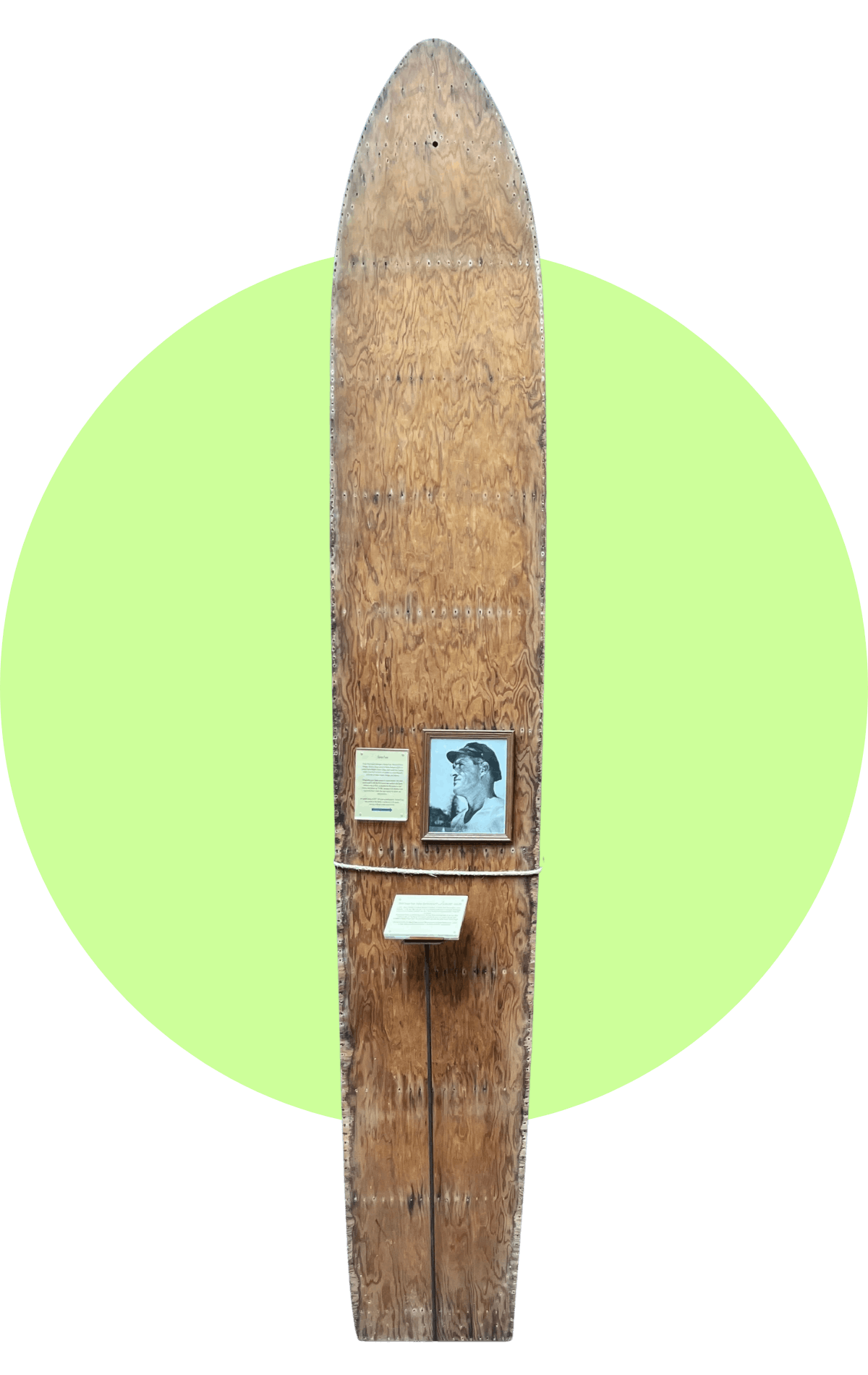
Dimensions: 10’11” x 5”
Weight: 54 LBS
In 1937, Popular Mechanics magazine published an article by Tom Blake titled “How to Build a Hollow Surfboard.” At the time, Blake was one of the few surfboard manufacturers in existence, and because each board was handmade, production was slow. The article inspired many early surfers to build their own boards.
This particular board was made by Gates Foss, following Blake’s published plans. At the time, Gates worked part-time at “The Plunge” (Los Baños) and used the boiler room beneath the pool as his makeshift workshop. Rumor has it that other local surfers also used that hidden space to craft boards.
This was one of the first boards Gates surfed at Rincon and along the Santa Barbara coast—a piece of early California surfing history shaped in the shadows beneath a swimming pool.
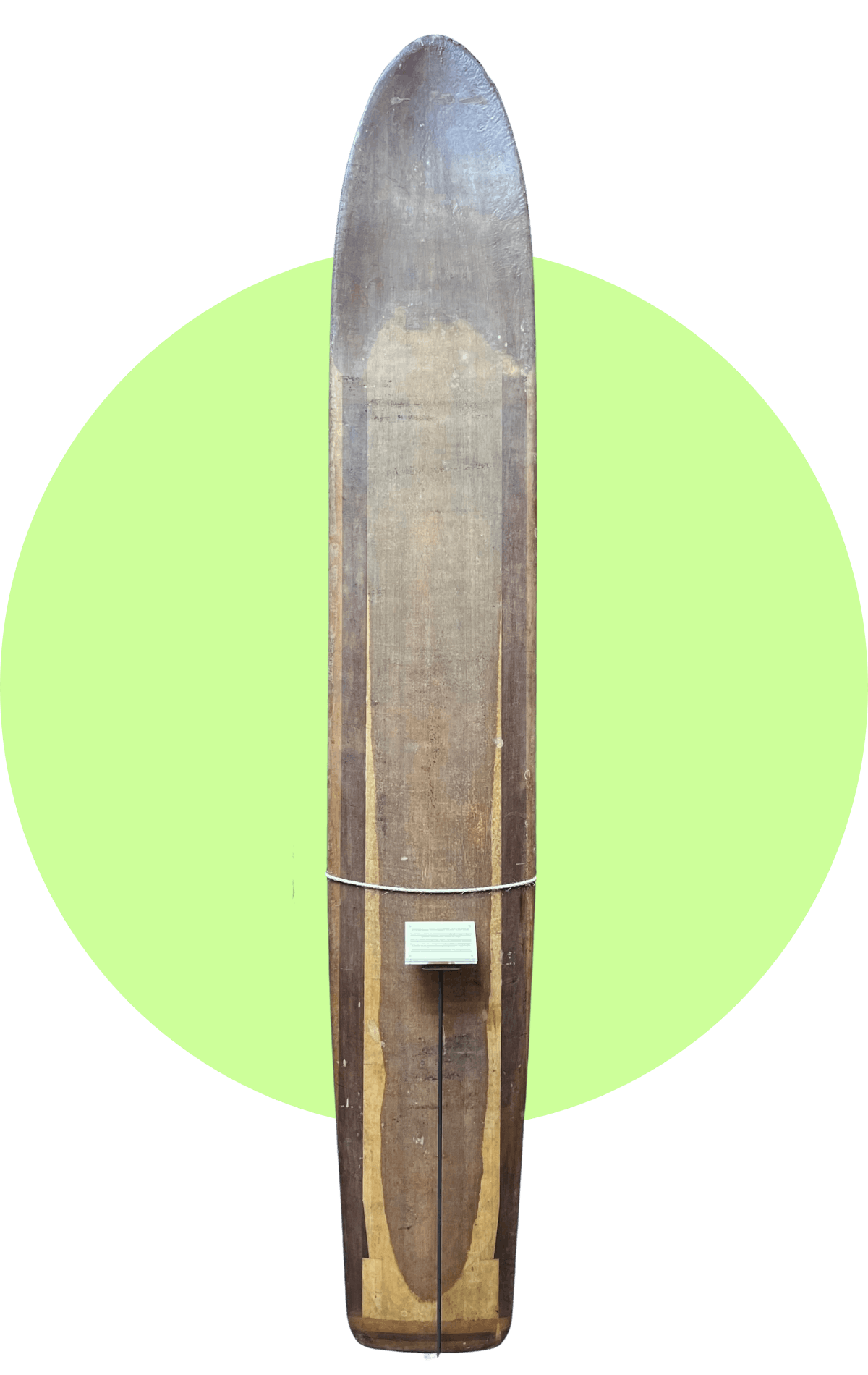
Dimensions: 11’4” x 22.5” x 4.5”
Weight: 69 LBS
Robert “Bob” Simmons is considered by many to be the father of the modern surfboard. Born in Los Angeles in 1919, he was primarily based at Windansea but would travel to Rincon to test his designs. In 1949, Simmons brought 17-year-old Renny Yater to Rincon to try out his latest creation—Renny’s first visit to the break.
Simmons wasn’t satisfied with the board’s performance, so he gifted it to local surfer Gates Foss. The board’s nose rocker was groundbreaking for the time and caught the attention of other local surfers, including Mike Stermer and Joe Wulbrandt.
This style of board would later be known as the “Simmons Spoon” or “Simmons Sandwich.” The “Sandwich” name referred to its construction: during an era dominated by solid wood boards, Simmons incorporated foam—salvaged from seaplane pontoons—between layers of wood to reduce weight.
The modifications made to the Pacific Systems board shown to the right were a direct response to the introduction of Simmons’s design. This meeting and board exchange marked the arrival of rocker in surfboards in the Santa Barbara area.
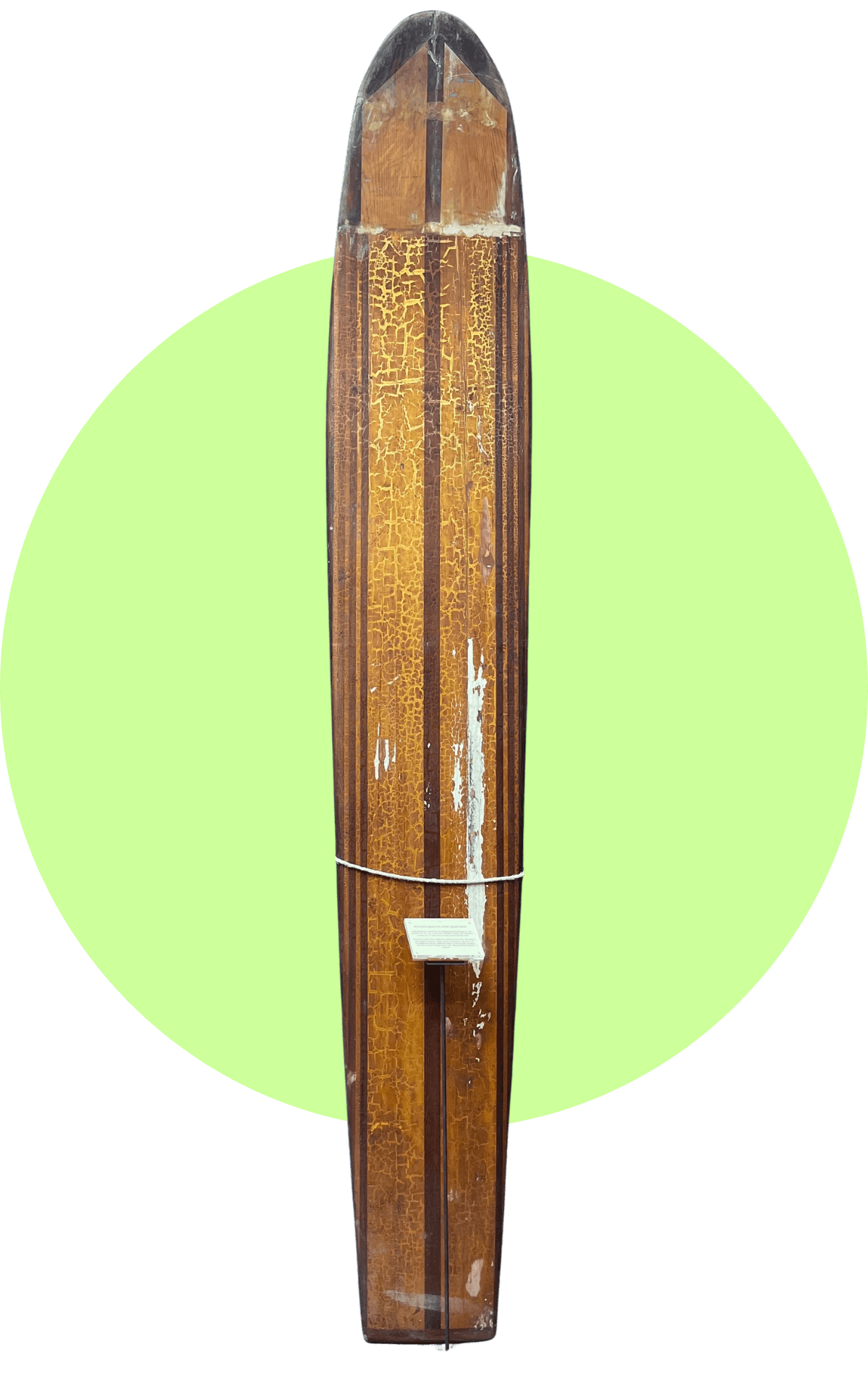
Dimensions: 11’6” x 22.25” x 3.75”
Weight: 68 LBS
Pacific System Homes was best known for manufacturing prefabricated houses, but in the early 1930s, the owner’s son—an avid surfer—convinced the company to add a surfboard to its production line. The result was the first mass-produced surfboard in history.
This particular example features a modified nose, influenced by Bob Simmons. When Simmons gifted his board to Gates Foss in 1944, it marked the introduction of nose rocker to the Santa Barbara surf community.
Inspired by the design, Foss and a few other local surfers altered their own boards to include more nose rocker, helping prevent them from diving underwater.
Gates Foss
These three boards belonged to Gates Foss. Born in 1904 in Douglas, Arizona, Gates moved to Santa Barbara in 1925 to attend Santa Barbara State College, which would later become UCSB. From 1929 to 1945, he worked as a state lifeguard, stationed at Padaro Beach, Refugio, and Gaviota.
Lifeguarding gave Gates access to rescue boards—the same boards used to ride the first waves ever surfed in the Santa Barbara area. In 1929, he became the first person to surf Rincon, then known as “3 Mile” because of its distance from Carpinteria Reef. Gates also used boards for lobster and abalone diving.
He passed away in 1987. His great-granddaughter, Camryn Foss, has carried on the family’s connection to the ocean, working at Beach House since 2020.
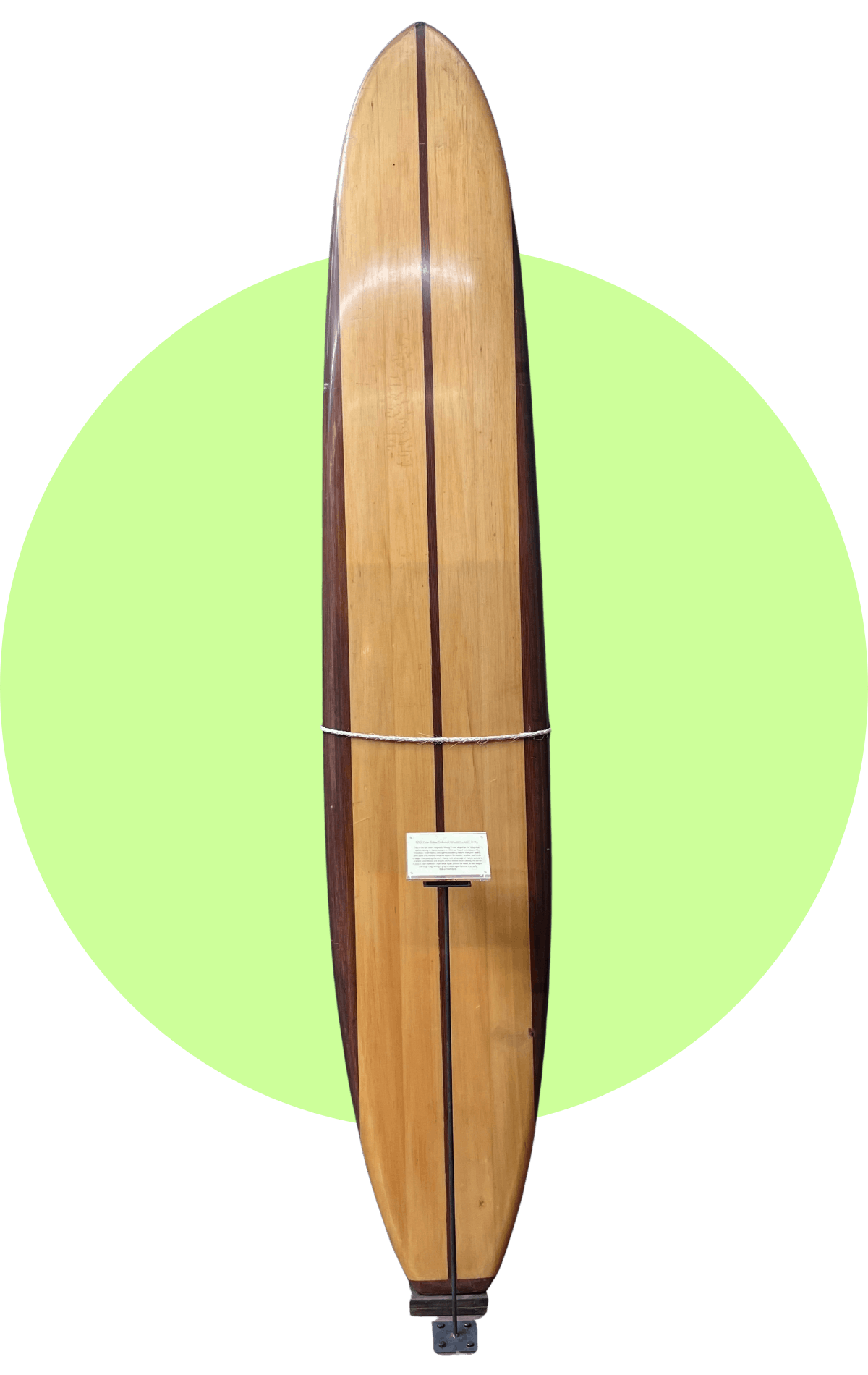
Dimensions: 9’6” x 21.5” x 3.25”
Weight: 34 LBS
This is the last board Reynolds “Renny” Yater shaped at the Velzy shop before moving to Santa Barbara. In 1959, surfboard materials were in transition—foam blanks were gaining popularity despite their poor quality, while balsa and redwood remained superior but heavier, costlier, and harder to shape. Recognizing this shift, Renny took advantage of Velzy’s access to premium wood blanks and shaped one for himself before leaving. He surfed it once in San Clemente—then never again. Before his move, he also shaped The Grey Lady, tinting it grey to mask imperfections in an early Walker foam blank.
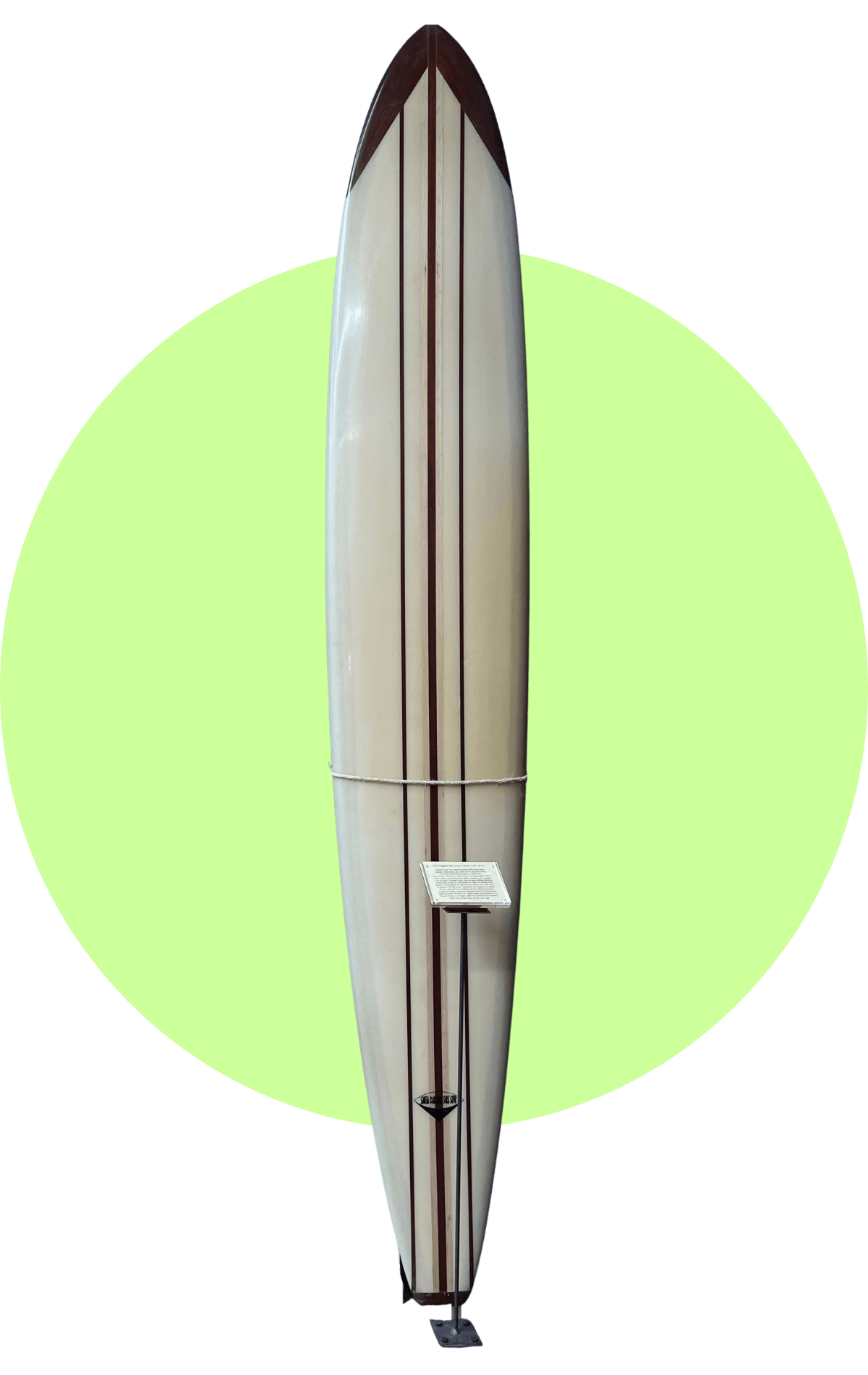
Dimensions: 10’2.5” x 20.25” x 3.5”
Weight: 37 LBS
Reynolds “Renny” Yater shaped this board in 1959, his first year of production in Santa Barbara, as a custom order for big waves in Hawaii. At the time, these boards were known as “Elephant Guns.”
That same year, Renny moved to Santa Barbara to fish commercially for lobster. With the fishing season lasting only six months, he needed a way to stay busy in the off-season. He decided to open a shop and shape surfboards, partnering with Dick Perry to launch the Santa Barbara Surf Shop at 28 Anacapa Street. Because of this partnership, the original logo didn’t include Yater’s name. In 1961, he relocated to 120 Lillie Avenue in Summerland, went independent, and updated the logo to gold with “Custom Surfboards by Yater.” Boards from his first two years, like this one, featured the original black label.
In 2001, Roger Nance bought this board in San Pedro from a tugboat captain who had inherited it from his uncle. The uncle, a Los Angeles resident, had ordered the board from Renny, surfed it once at Sunset Beach, and never used it again.
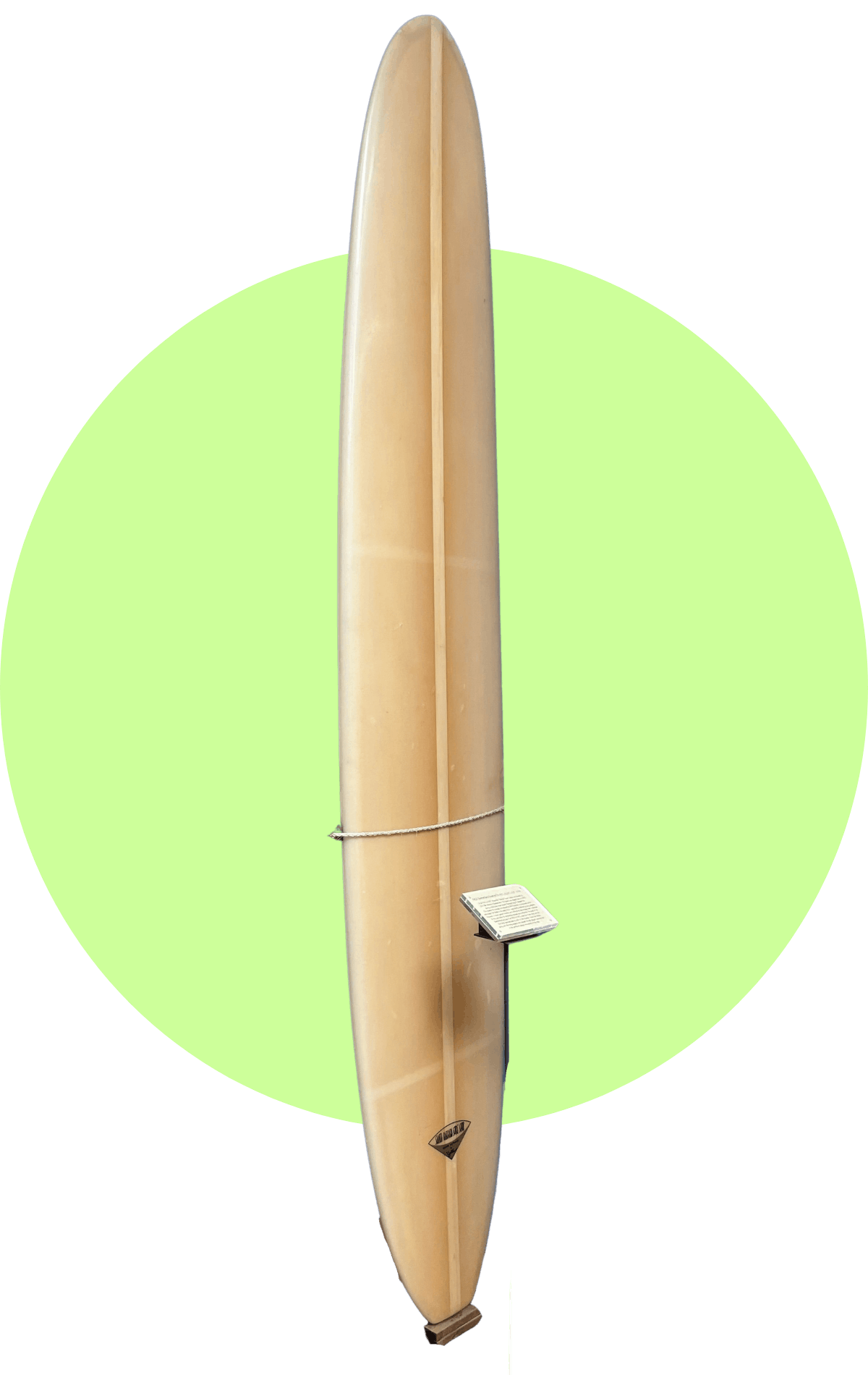
Dimensions: 9’10” x 22.25” x 3.5”
Weight: 30 LBS
From 1961 to 1967, Reynolds “Renny” Yater’s shop was located at 120 Lillie Avenue in Summerland. This board was shaped there in 1962, during a time when most boards featured large D-shaped fins. The reverse fin concept, introduced by Phil Edwards—a renowned surfer and shaper for Hobie in the early ’60s—was briefly explored by many shapers. However, it never gained traction, as it offered no advantages over traditional D fins, and other fin innovations proved more effective.
The peak of the Summerland era was from 1961 to 1965, when the Yater shop and the Owl shop operated side by side on Lillie Avenue. These two shops, along with the many shapers who passed through, played a pivotal role in the surfboard design innovations of the time.
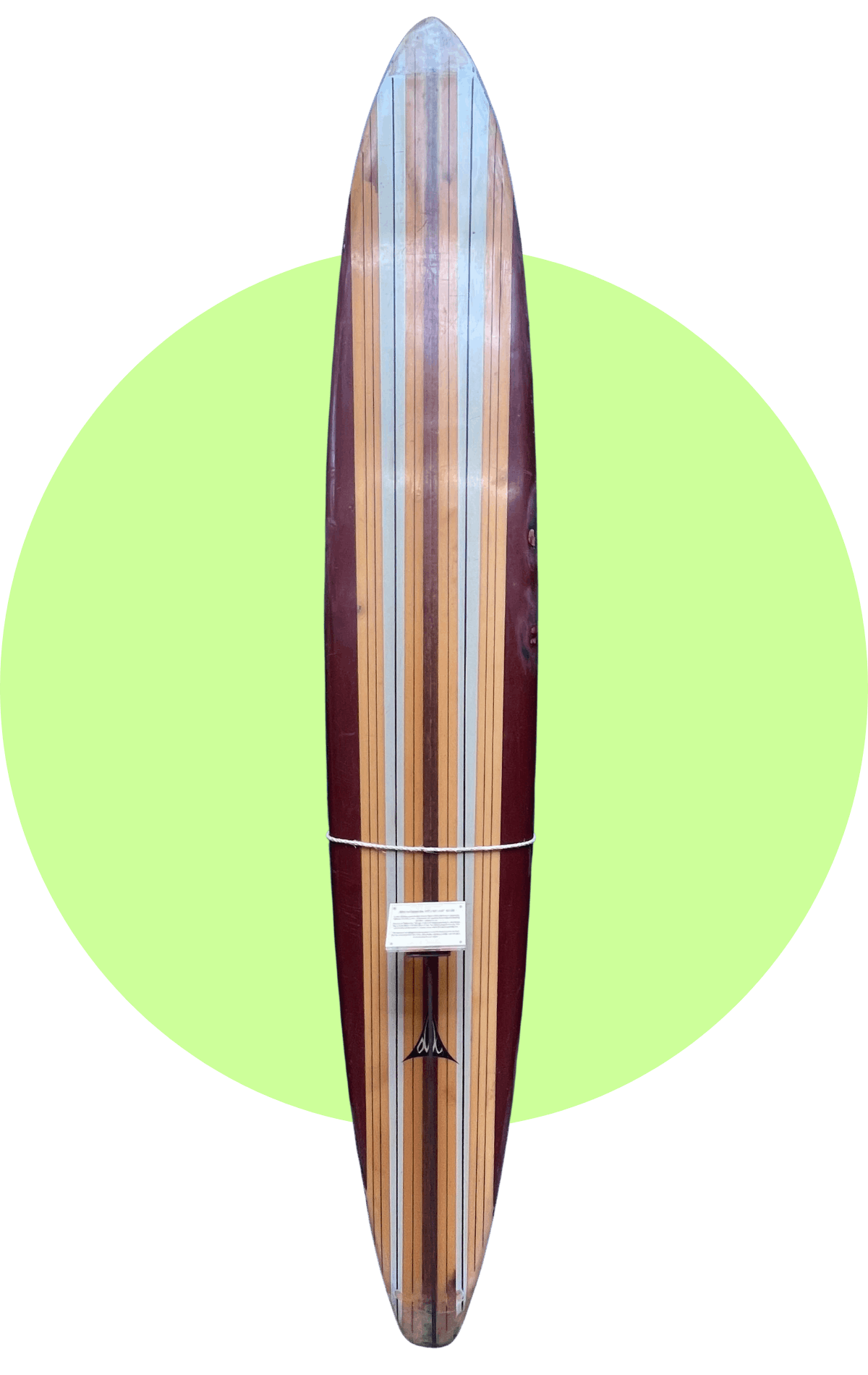
Dimensions: 10’11” x 22” x 3.5”
Weight: 45 LBS
In 1961, Jeff White opened the White Owl Surf Shop at 2320 Lillie Avenue in Summerland, California. From 1961 to 1965, all Owl boards were shaped by Brian Bradley and glassed by Jeff White—including this one.
Known as an “Elephant Gun,” this type of board was designed specifically for riding Waimea Bay or Sunset Beach on the North Shore of Oahu. Few California shapers in the early ’60s were crafting boards intended for Hawaiian waves, making this style exceptionally rare.
This very board was displayed and photographed in the Owl Surfboards booth at the 1964 Surf Fair at the Santa Cruz Civic Center. Brian Bradley remembers it vividly—and still calls it his favorite board he ever shaped.
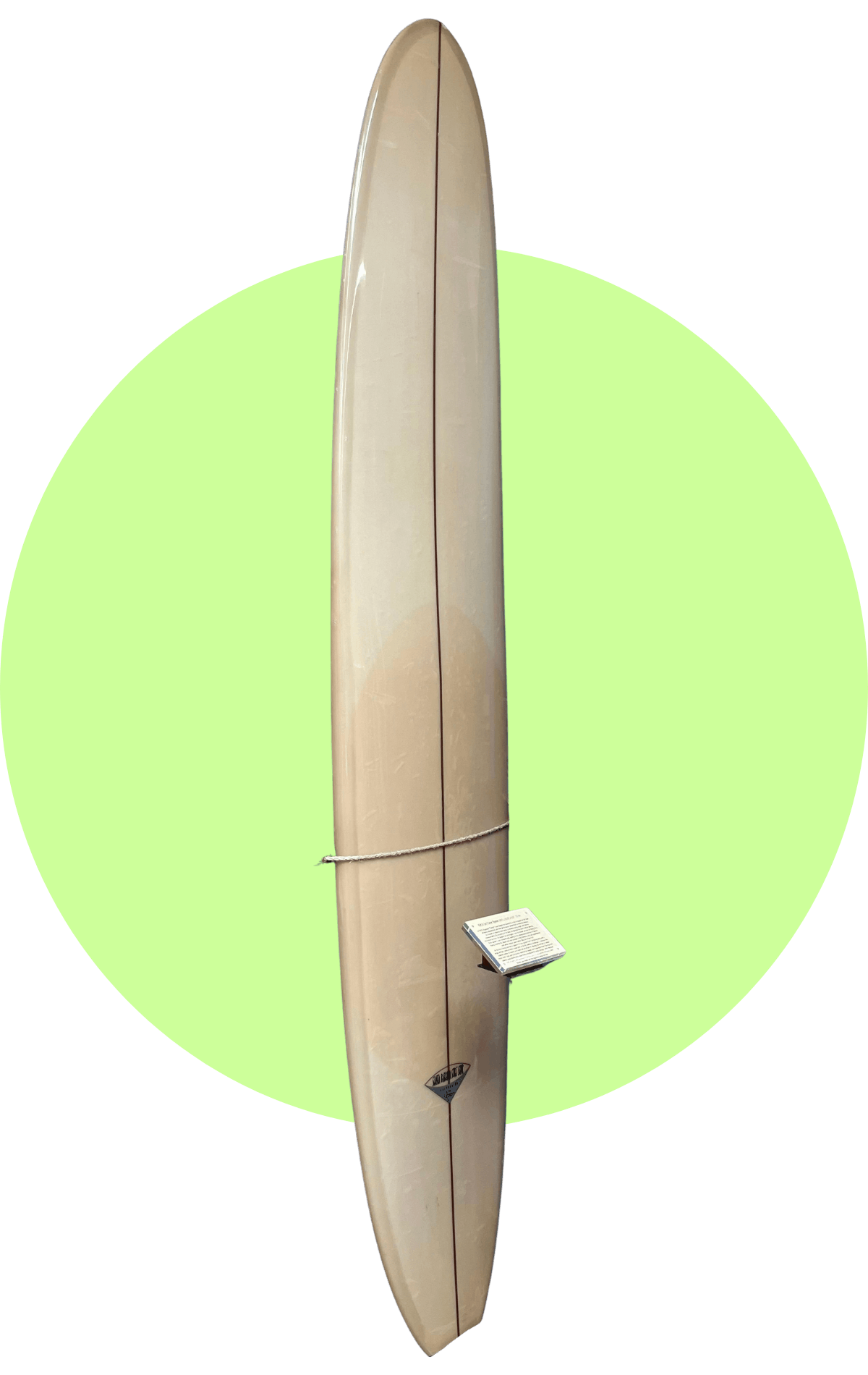
Dimensions: 9’10” x 22.5” x 3.5”
Weight: 25 LBS
In 1965, Reynolds “Renny” Yater shaped five boards for a trip to Hawaii but left them all behind, dissatisfied with their performance. Determined to refine his designs, he focused on reducing nose weight to minimize swing weight and improve maneuverability. By scooping out the deck, he lightened the board without altering its bottom contours. He shaped two prototypes—one for himself and one for Micky Dora. Both agreed it was a breakthrough, leading to the widespread production of Spoons. Renny credited the Spoon name and concept to Bob Simmons, who had experimented with similar designs years earlier.
Why the Offset Fin?
At the time, Renny was using a glass-in fin box system from Tom Morey along with a single stringer, which created a weak point at the fin, leading to breakage. To address this, a limited number of boards were made with an offset fin, allowing the stringer to remain intact. Both Yater and Owl boards featured this design, but it was short-lived. The long-term solution came shortly after when Renny introduced the wedge stringer, which improved both durability and aesthetics. From that point on, and until his retirement, most Spoons were made with this signature wedge stringer.
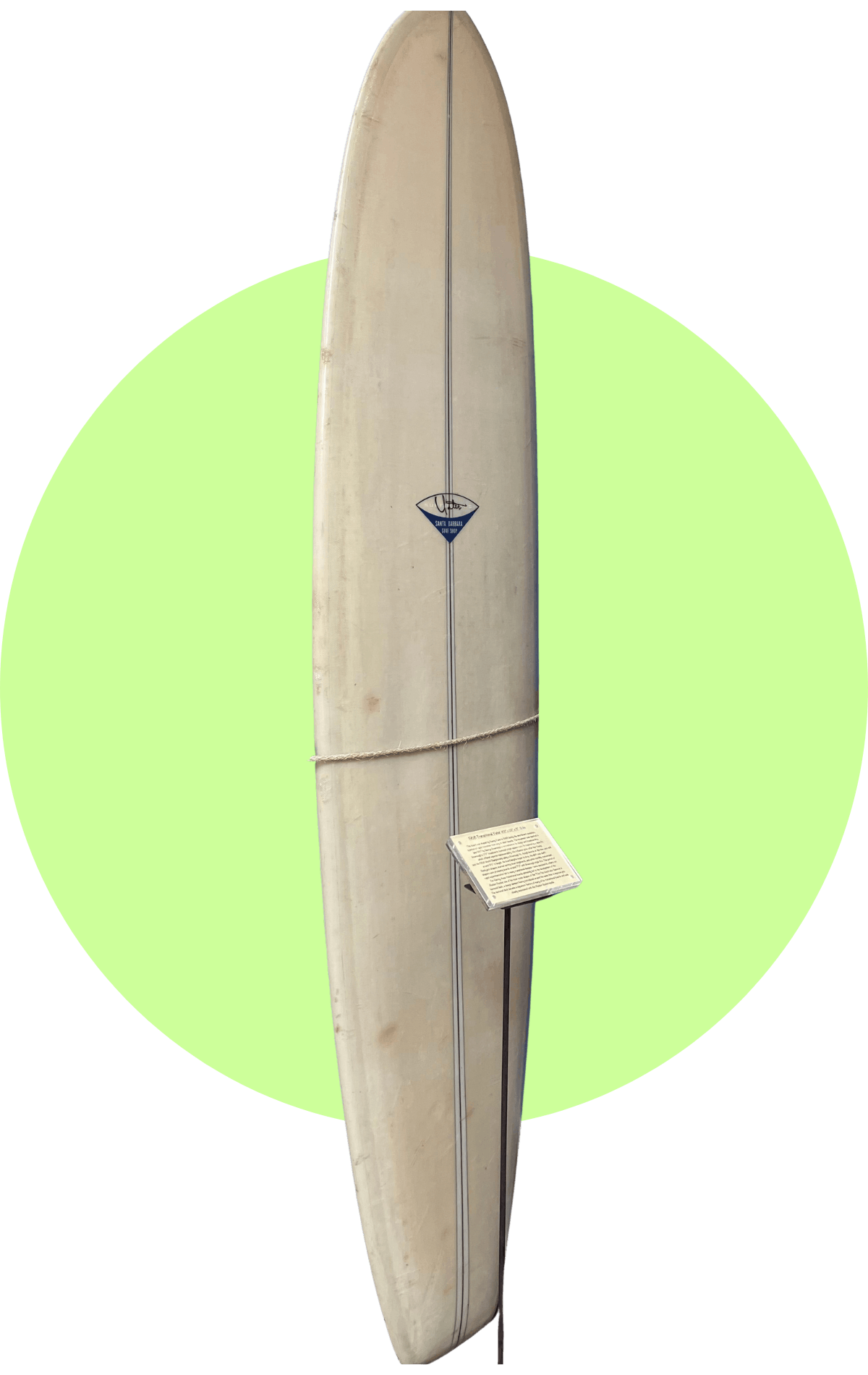
Dimensions: 8’2” x 22” x 3”
Weight: 15 LBS
This board was shaped by Renny Yater in 1968 during the shortboard revolution, a period of rapid transition from long to short boards. The movement was sparked in late 1967 by George Greenough’s innovations in fin design and kneeboarding. Greenough’s 5’0” kneeboards featured a high-aspect-ratio fin inspired by a tuna fin, which offered superior maneuverability. His influence grew after Nat Young won the 1966 World Championship using a Greenough fin, though boards at the time were still around 9’6” in length.
As board lengths began to drop, the shift was swift. Backyard shapers started cutting down longboards, and within months, mainstream shapers were producing boards around 7’0” with Greenough-style fins. This period of rapid experimentation led to many transitional designs—some successful, others not. For Renny, these transitional boards ultimately led to the development of the Pocket Rocket, one of his most iconic shapes of the ’70s.
This board also features a textured deck, a design element Renny introduced around the same time to improve grip. The textured deck became a signature feature of many of his transitional boards and was closely associated with the Pocket Rocket model.
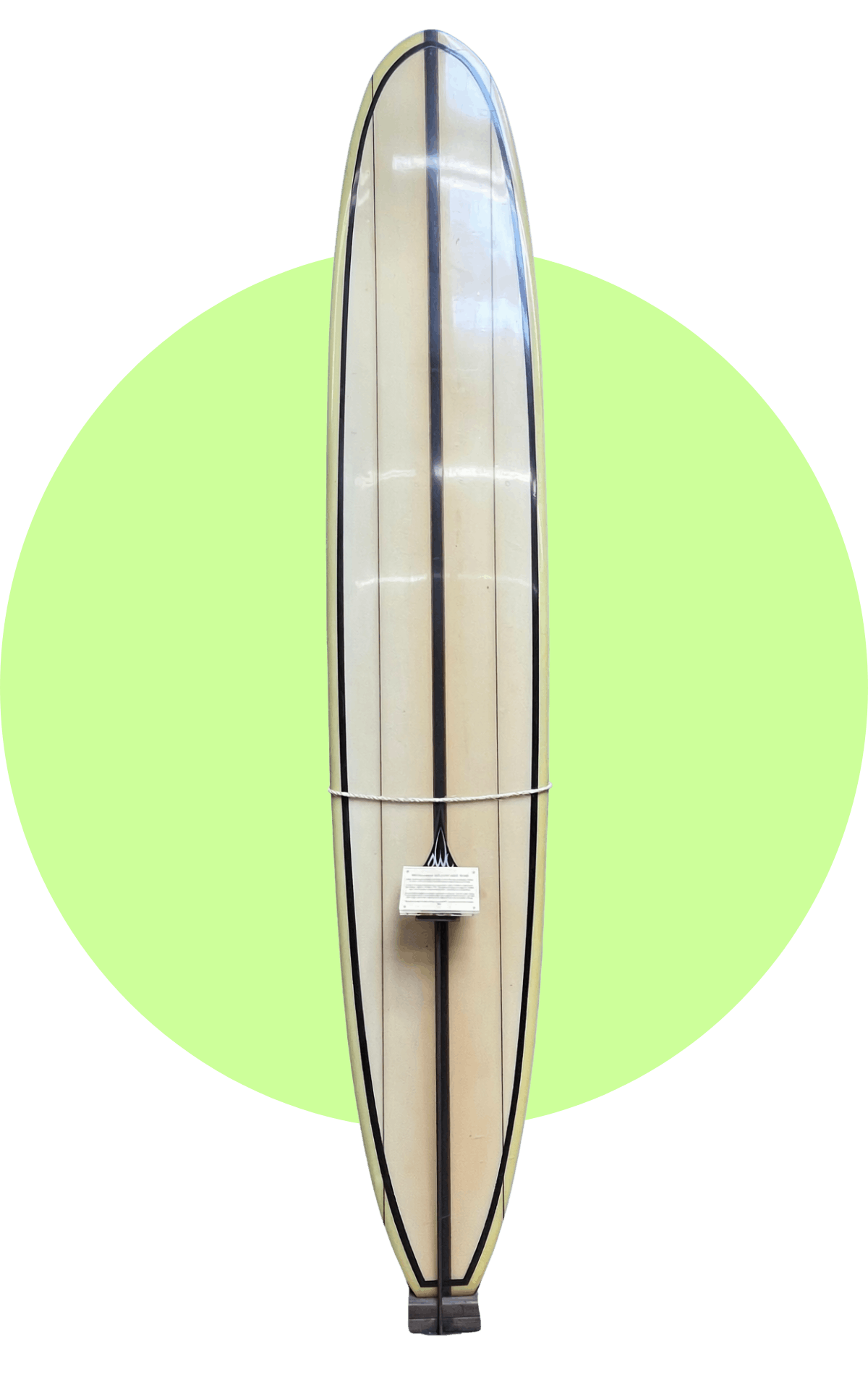
Dimensions: 10’0” x 22.5” x 3.25”
Weight: 30 LBS
In 1961, Jeff White opened the White Owl Surf Shop at 2320 Lillie Avenue in Summerland, California. From 1961 to 1965, all Owl boards were shaped by Brian Bradley and glassed by Jeff White.
In 1965, Jeff closed the Summerland shop and opened Surf n’ Wear at 209 West Carrillo Street in Santa Barbara, California. From 1966 to 1974, the majority of Owl boards were shaped by Tom Hale. While a few other shapers contributed during this time, Tom handled most of the production.
Even before Brian Bradley left, he had begun taking boards to Ventura for Tom Hale to glass—making Tom the natural successor as Owl’s primary shaper. He continued in that role until moving to San Diego in 1974. When Tom left, Marc Andreini took over shaping for Owl, a role he continues to this day.
This board is an early Tom Hale Owl, likely from around 1967—just before the shortboard revolution began.
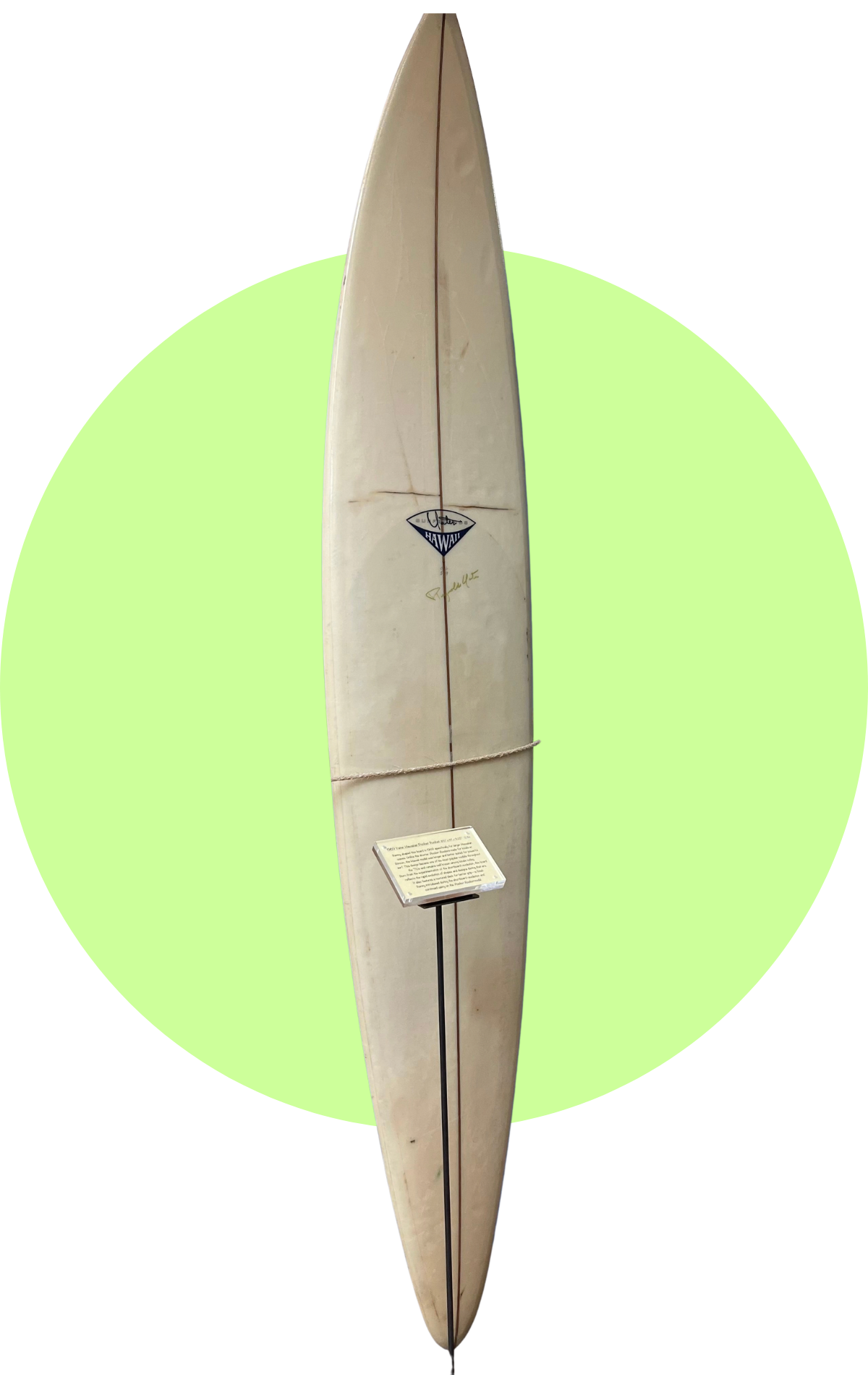
Dimensions: 8’6” x 19” x 3.25”
Weight: 12 LBS
Renny shaped this board in 1969 specifically for larger Hawaiian waves. Unlike the shorter Pocket Rockets made for locals at Rincon, the Hawaii model was longer and better suited for powerful surf. This design became one of his most popular models throughout the ’70s and remains well known among locals today.
Born from the experimentation of the shortboard revolution, this board reflects the rapid evolution of shapes and designs during that era. It also features a textured deck for better grip—a finish Renny introduced during the shortboard revolution and continued using on the Pocket Rocket model.
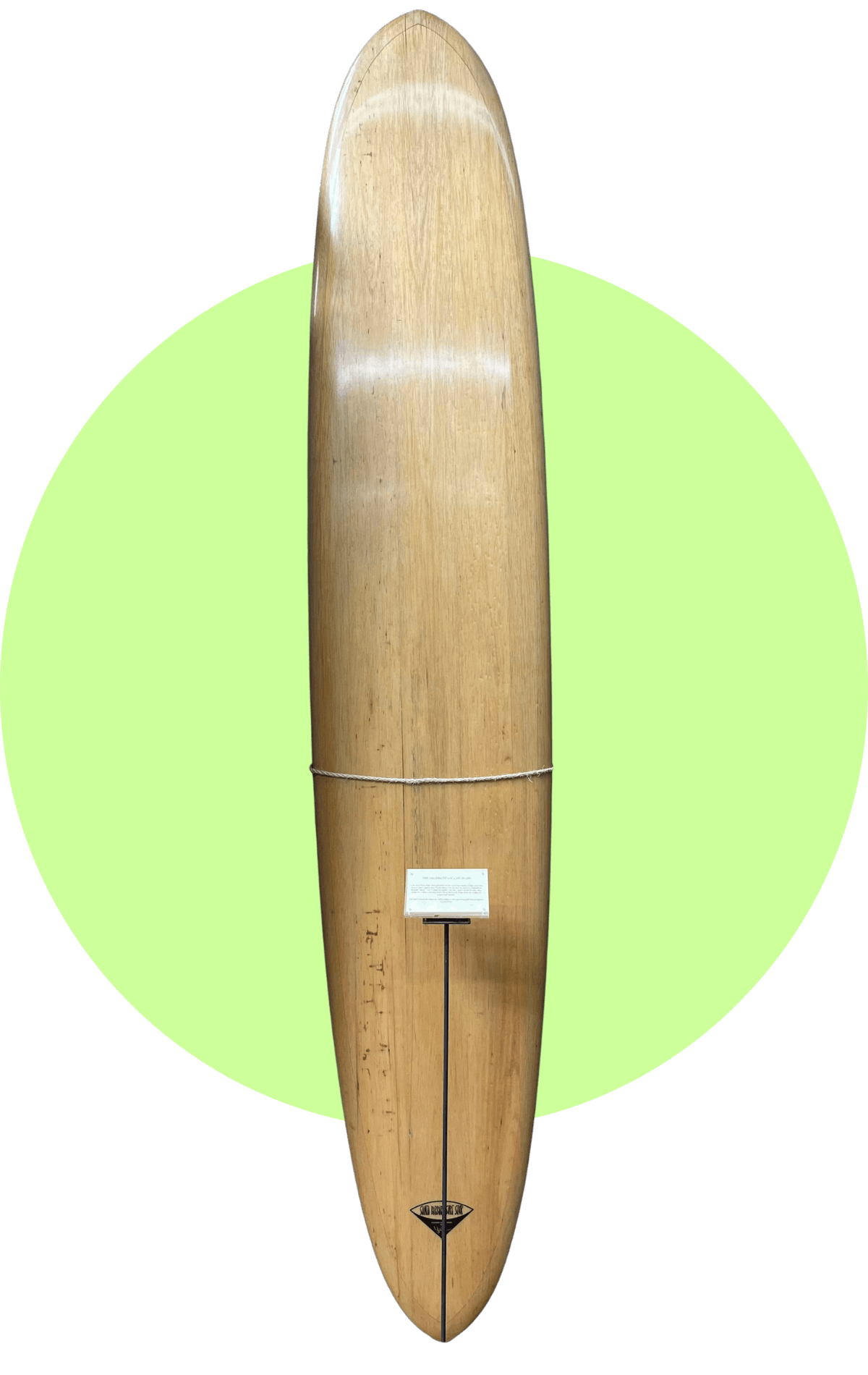
Dimensions: 9’11” x 23” x 3”
Weight: 30 LBS
In the early 1990s, Roger Nance purchased the last two 10-foot bundles of balsa wood from General Veneer, yielding about 16 balsa blanks. From the final two blanks, he commissioned Reynolds “Renny” Yater to shape two boards—one with a square tail and the other with a pintail. As a tribute to the early boards Renny had crafted, Roger asked him to apply the original black laminate.
This board is the pintail, shaped as a faithful replica of the style Renny might have produced in the late 1950s.
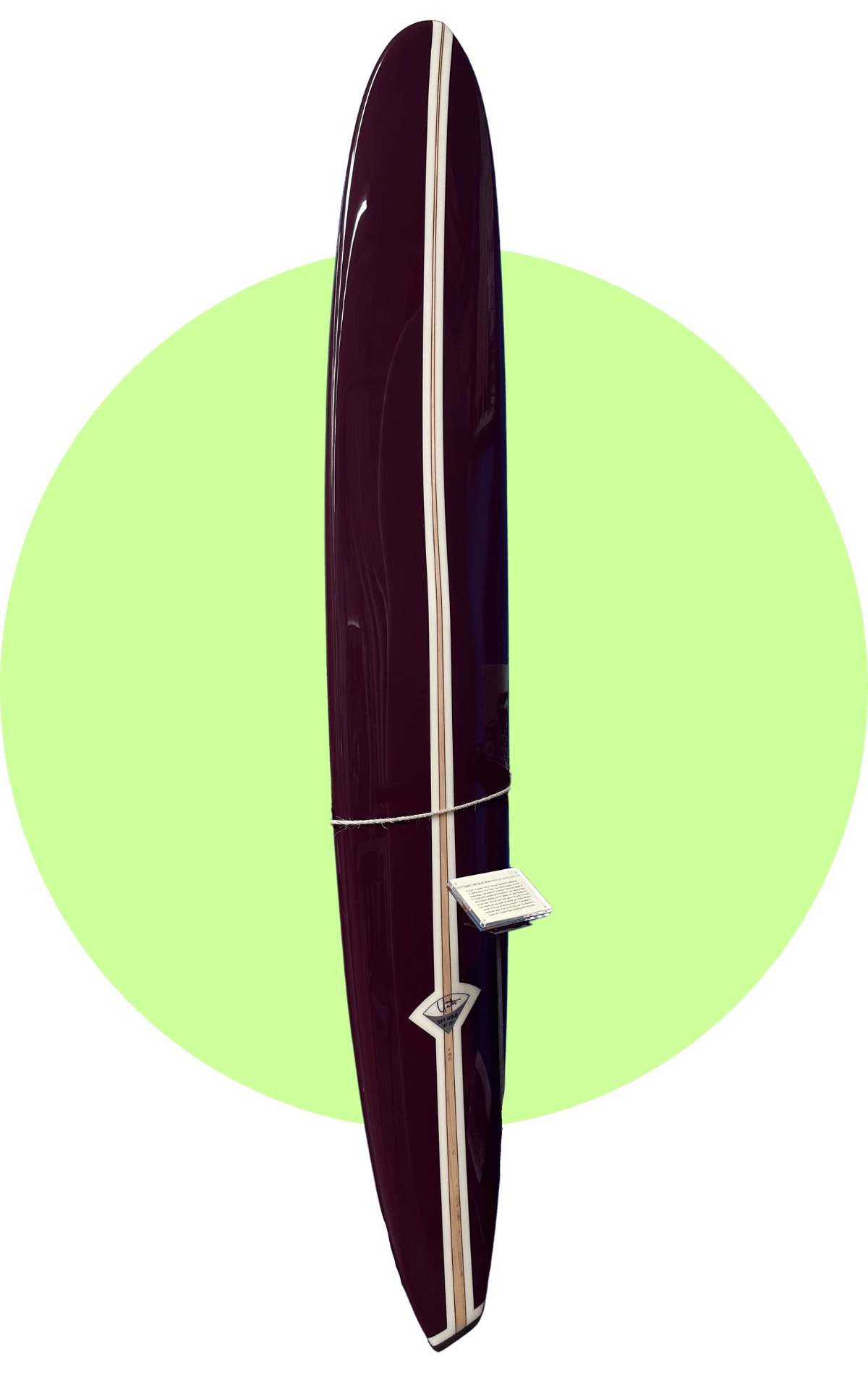
Dimensions: 9’6” x 22.75” x 3.25”
Weight: 22 LBS
In 1965, Reynolds “Renny” Yater shaped five boards for a trip to Hawaii but left them all behind, dissatisfied with their performance. Determined to refine his designs, he focused on reducing nose weight to minimize swing weight and improve maneuverability. By scooping out the deck, he lightened the board without altering its bottom contours. He shaped two prototypes—one for himself and one for Micky Dora. Both agreed it was a breakthrough, leading to the widespread production of Spoons. Renny credited the Spoon name and concept to Bob Simmons, who had experimented with similar designs years earlier.
Why the Offset Fin?
At the time, Renny was using a glass-in fin box system from Tom Morey along with a single stringer, which created a weak point at the fin, leading to breakage. To address this, a limited number of boards were made with an offset fin, allowing the stringer to remain intact. Both Yater and Owl boards featured this design, but it was short-lived. The long-term solution came shortly after when Renny introduced the wedge stringer, which improved both durability and aesthetics. From that point on, and until his retirement, most Spoons were made with this signature wedge stringer.
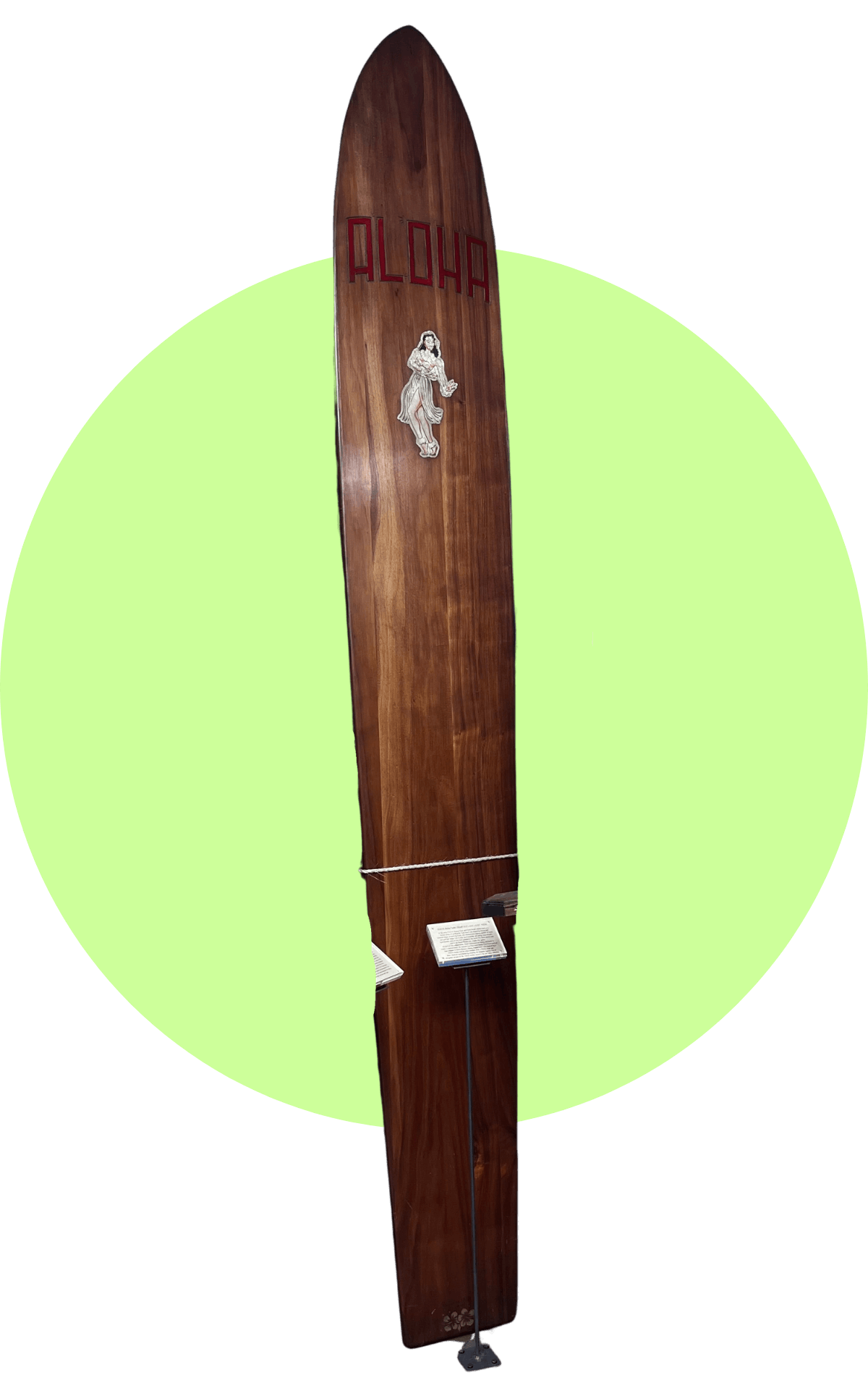
Dimensions: 12’0” x 21.5” x 2.25”
Weight: 105 LBS
In the early 2000s, Renny Yater and Kevin Ancell collaborated on a limited series of surfboards. Each board was shaped by Renny and featured unique artwork by Kevin, who incorporated abalone, mother-of-pearl, and gold leaf inlays. Due to their craftsmanship and rarity, these boards have become some of the most valuable in the world. The entire series was sold at the Beach House over roughly five years.
As part of this collaboration, Roger commissioned Renny and Kevin to create a custom board. He sourced two Koa wood blanks from Kona and had them shipped to Santa Barbara. Renny shaped both—one inspired by a 1930s design and the other modeled after a 1960s-style gun. Marc Andreini contributed by creating the template, basing it on an elongated version of the Tom II, another board in the surf shop collection.
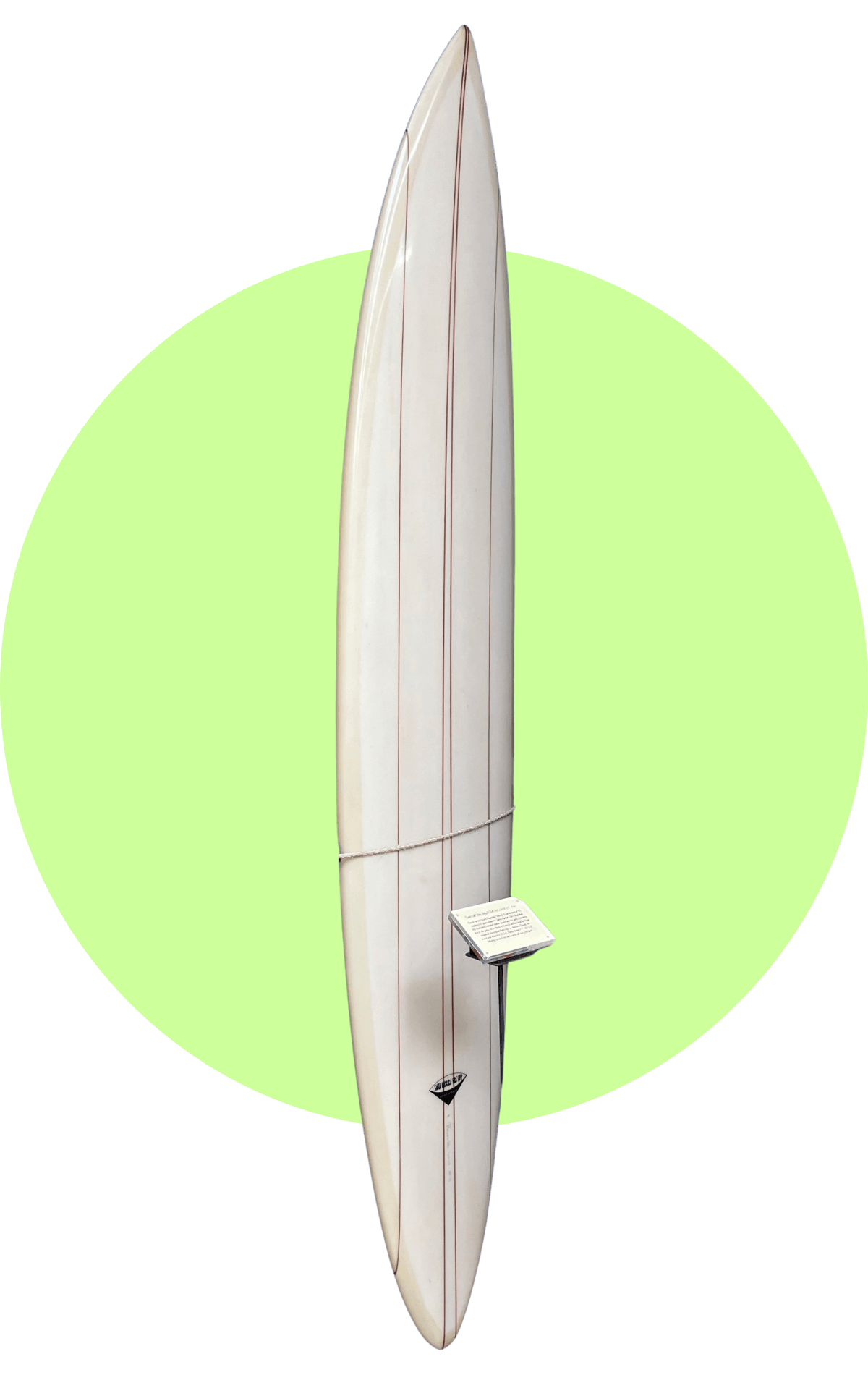
Dimensions: 9’6” x 21.75” x 3”
Weight: 15 LBS
This is the last board Reynolds “Renny” Yater shaped at 92, capping 65 years under his Santa Barbara Surf Shop label. His final batch included twelve spoons and six guns, this being one of the guns. As a tribute to Renny’s earliest boards, Roger requested the original black logo for this one. Though the board was shaped in 2024, Renny dated it “7/22/23.” Moving forward, no new boards will carry his label.